
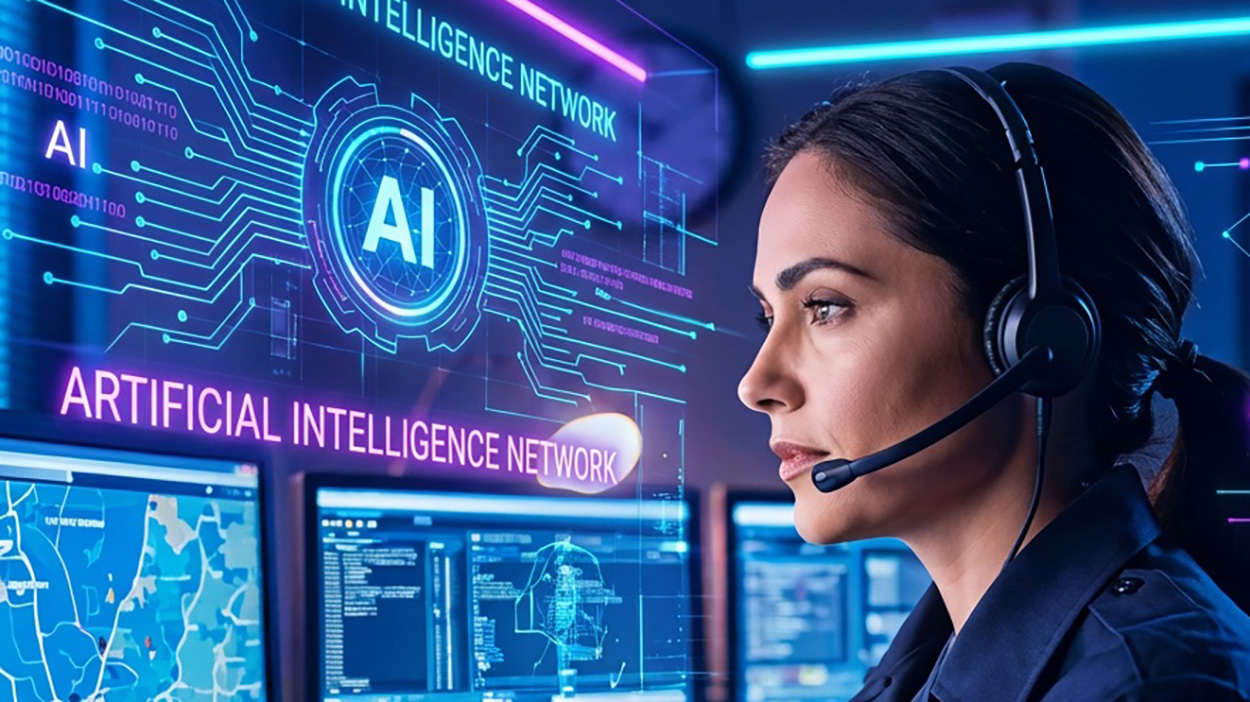
The 911 call environment has transformed from simple voice capture to a complex data-driven landscape, driven by higher call volumes, advanced NG9-1-1 features, and rising expectations for rapid, informed response.
As the 911 landscape evolves, today’s dispatchers are required to process critical information faster than ever, often while managing multiple incidents simultaneously. This reality has created a new challenge for public safety: information overload.
AI directly addresses the growing challenge of information overload, emerging as a crucial support for modern dispatchers.
By integrating with recording systems, AI provides dispatchers with real-time operational support—enabling faster, more accurate decisions and improved confidence.
Real-Time Transcription: Turning Audio Into Actionable Text
This brings us to real-time transcription, which represents a significant shift in the evolution of recording technology.
AI-driven transcription engines convert live 911 voice recordings into readable text as calls are happening. This capability allows dispatchers to visually confirm critical details such as addresses, names, vehicle descriptions, or medical conditions without repeatedly asking callers to restate information.
By reducing clarification loops, real-time transcription directly improves the seconds-to-dispatch metric.
Dispatchers can focus on assessment and response rather than transcription, which is especially valuable during high-stress or emotionally charged calls. The result is improved accuracy, faster call handling, and reduced cognitive strain on frontline personnel.
Sentiment and Keyword Analytics: Identifying the Unspoken
Beyond transcription, AI in communications recording adds a layer of intelligence through speech analytics, helping dispatchers and supervisors surface critical information in real time. These capabilities include:
- Keyword detection for terms related to weapons, medical emergencies, or imminent threats
- Automated alerts when predefined trigger phrases are identified
- Vocal stress analysis to help recognize panic, confusion, or escalating distress
- Contextual prioritization during high-call-volume or multi-victim incidents
These tools accelerate critical decision-making, enhance awareness, and lighten dispatcher workloads during intense, high-pressure scenarios.
When predefined triggers are detected, systems can automatically alert supervisors or flag calls for additional support.
During chaotic multi-victim incidents, this capability acts as a force multiplier, helping dispatchers prioritize information and ensuring critical cues are not missed.
AI amplifies a dispatcher’s situational awareness during peak demand without removing the need for human decision-making.
Beyond The Call: Streamlining Incident Reconstruction
AI’s value extends beyond the initial call, streamlining every phase of incident response and review.
AI-indexed 911 dispatch recordings allow investigators and command staff to locate key moments within hours of recorded audio in seconds. Automated transcripts create searchable records that dramatically reduce the time required for incident reconstruction, after-action reviews, and legal discovery.
When these transcripts are linked directly to CAD entries (computer-aided dispatch, which tracks and manages incident data), agencies gain a unified operational record that connects voice, data, and timeline. This integration strengthens accountability, supports defensible investigations, and improves long-term data retention practices within cloud-based voice logging environments.
Reducing Dispatcher Burnout Through Intelligent Support
Dispatcher fatigue and burnout are growing concerns across public safety.
Constant multitasking, emotional exposure, and sustained cognitive demand take a measurable toll. AI tools help reduce this burden by offloading repetitive tasks such as note-taking, keyword scanning, and post-call documentation.
By acting as a digital assistant rather than a replacement, AI supports dispatcher wellbeing while maintaining human judgment at the center of emergency response. This balance is essential to building resilient teams and sustaining performance over time.
The BEI Integration Approach
Advanced AI capabilities only deliver value when they integrate seamlessly into existing infrastructure.
BEI specializes in bringing AI-ready public safety recording systems into live environments without disrupting service. By integrating modern analytics and transcription tools with legacy audio and video recording equipment, BEI ensures agencies can modernize incrementally while preserving system reliability.
This integration-first approach allows public safety organizations to adopt the future of recording systems at a pace that aligns with operational and budget realities.
A Safer Future For Public Safety
AI-driven transcription and analytics are pivotal for public safety’s digital transformation. These tools elevate awareness, ease workloads, and accelerate response, directly supporting those who protect communities.
For PSAP and law enforcement leaders, implementing AI is now a strategic requirement for safety, efficiency, and long-term resilience—not just an optional upgrade.
Partner with BEI to assess how AI-integrated recording solutions can strengthen your 911 operations and support the dispatchers on the front lines.